

Avoiding damage from snow pressure:
Tips for the cold season
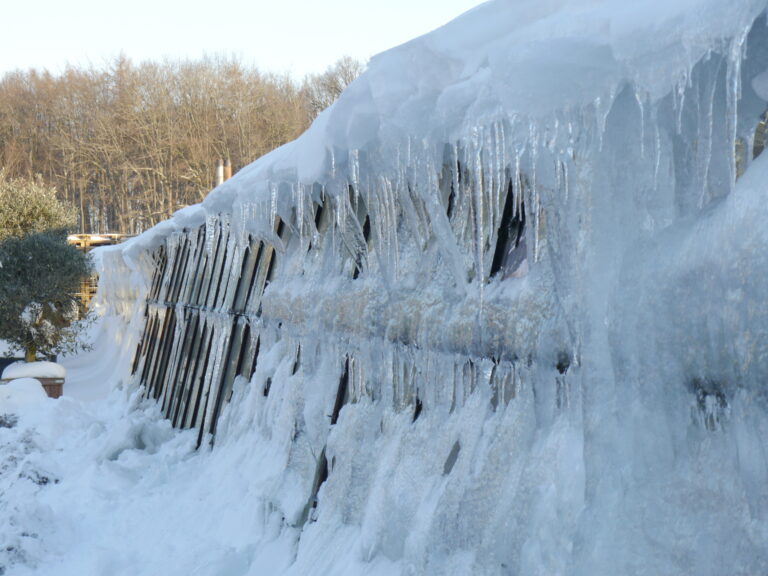
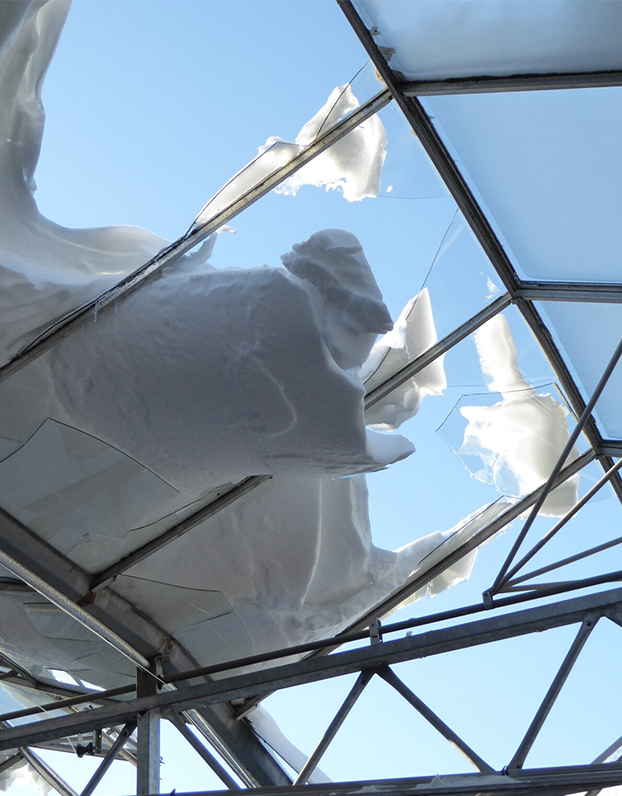
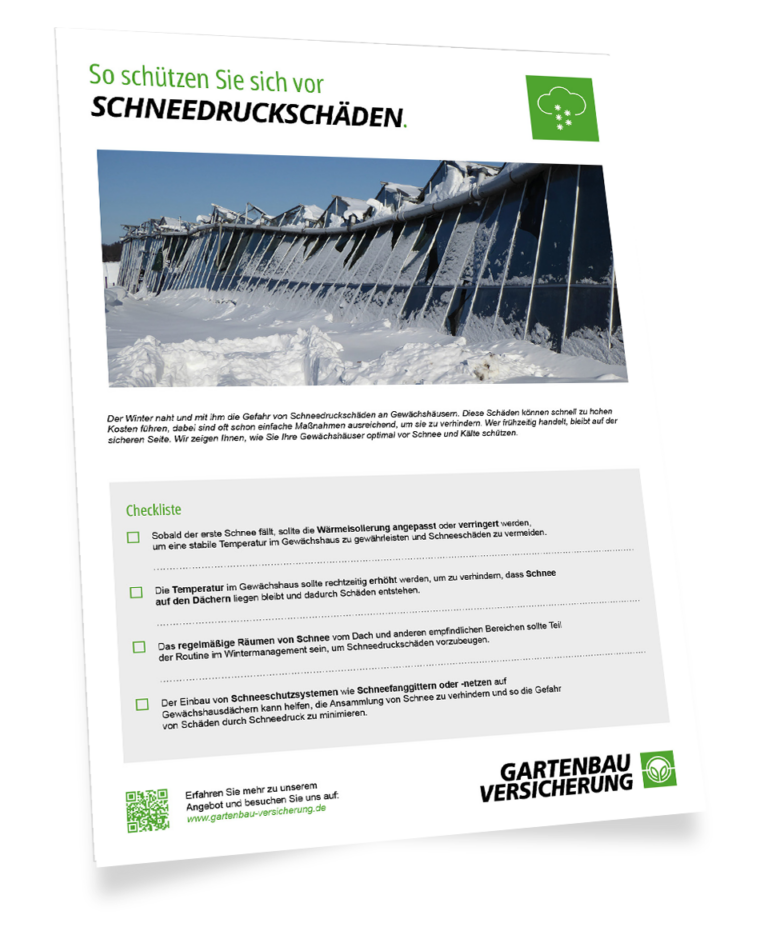
Winter is coming and with it the risk of damage to greenhouses caused by snow pressure. This damage can quickly result in high costs, although often simple measures are all it takes to prevent it. By taking action in advance, you will be on the safe side. Find out the best way to protect your greenhouses from snow and cold.
Take action in advance
As soon as the first snowflakes fall, energy-saving measures such as thermal insulation should be suspended immediately. It is also important to increase the temperature in the greenhouse to such an extent that the snow does not accumulate and thaw on the roof. “Once a layer of snow has formed, it is almost impossible to get rid of it again,” explains Konstantin Lang, head of the claims department at Gartenbau-Versicherung. “Then damage from snow pressure is almost unavoidable.”
Read on to find out how you can protect your business.
Adjust the insulation
Adjust the insulation
Temperature regulation
Temperature regulation
Clear snow regularly
Clear snow regularly
Install snow protection systems
Install snow protection systems
Check the roof structure
Check the roof structure
Energy-efficient heating systems
Energy-efficient heating systems
Keep an eye on the weather forecast
Keep an eye on the weather forecast
Draw up emergency plans
Notfallpläne erstellen
You are currently viewing a placeholder content from YouTube. To access the actual content, click the button below. Please note that doing so will share data with third-party providers.
More InformationFast action is crucial
The most important thing is to react quickly at the first sign of snow. Open all the screens and make sure that all the glass surfaces are warmed up to the same temperature. This will prevent a blanket of insulating snow from forming. If you notice that snow drifts and frozen gutters are making the situation worse, the use of strategically positioned supports can reduce the damage. Video: Using the example of damage caused by snow pressure in Münsterland, our risk consultant Klaus Bingel explains why it is so important to protect your business by insuring it appropriately.
General tips for winter
”It is essential to make sure that your heating system is regularly maintained and that you have sufficient fuel so that you can react quickly in an emergency and the heat gets to where it is needed in good time to melt ice and snow. You should therefore check your main heating system or decentralized heating appliances in plenty of time before winter.” Konstantin Lang advises. “If damage does occur, don’t hesitate to contact your local risk consultant. They will be happy to help and advise you.”
Sharing risks: Safety through precise weather warnings
The best protection starts with preparation. Gartenbau-Versicherung members can use the Meteosafe weather warning app from Kachelmannwetter. This is exclusively available to registered users in the Gartenbau-Versicherung member portal. The app provides minute-by-minute warnings of dangerous weather events, such as heavy snowfall or wind, at up to 10 locations of your choice.
Are you a member of Gartenbau-Versicherung but not yet registered in the member portal?
- Protect your greenhouses from snow pressure in advance and enjoy a worry-free winter!
Further possible risks and causes of snow pressure.
Snow load
on roofs

Unevenly distributed snow on flat roofs can lead to excessive loads, which jeopardizes the load-bearing capacity of the greenhouses.
Fluctuating temperatures cause snow to melt and freeze again, which makes the snow denser and increases the pressure on the roof.
Insufficient snow clearing
If snow is not cleared regularly, it can form a heavy, wet layer that puts a lot of strain on the roof.
Your contact person is looking forward to hearing from you.
You would like to report loss or damages?
Contact your risk advisor or submit a claim using our online form. Once we have received the notification of your claim, we will process it and contact you as quickly as possible.
In the event of a claim, we are here to help.
In the event of a claim, you need your insurance company to process your claim swiftly and unbureaucratically and provide immediate assistance.
Three things our members can count on:
Initial damage assessment within 48 hours.
Knowledge shared is knowledge doubled.
Focus topics: Useful information and helpful tips on horticulture.