
How to protect your greenhouse from hail damage
Safety precautions for your business
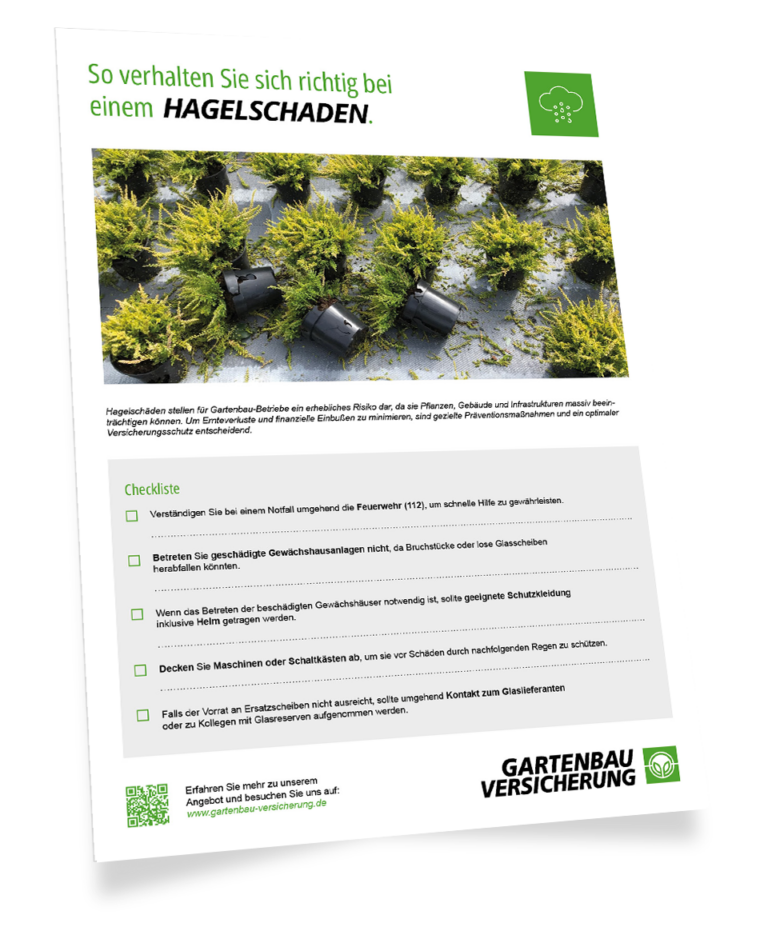
Hail damage poses a considerable risk for horticulture businesses, as it can have a severe impact on plants, buildings and infrastructure. In order to minimize crop damage and financial losses, targeted prevention measures and optimal insurance cover are crucial.
Hail damage – what now?
Hail events are difficult to predict, which makes it difficult to prepare at short notice. It is therefore particularly important to handle damage events correctly in order to prevent further hazards.
Emergency measures
Emergency measures
Avoid the danger zone
Avoid the danger zone
Protective clothing
Protective clothing
Protecting machines and electric appliances
Protecting machines and electric appliances
Organize glass pane replacement
Organize glass pane replacement
Covering the roof
Covering the roof
Marking glass breakage points
Marking glass breakage points
Contact your risk consultant
Contact your risk consultant
How does hail come about?
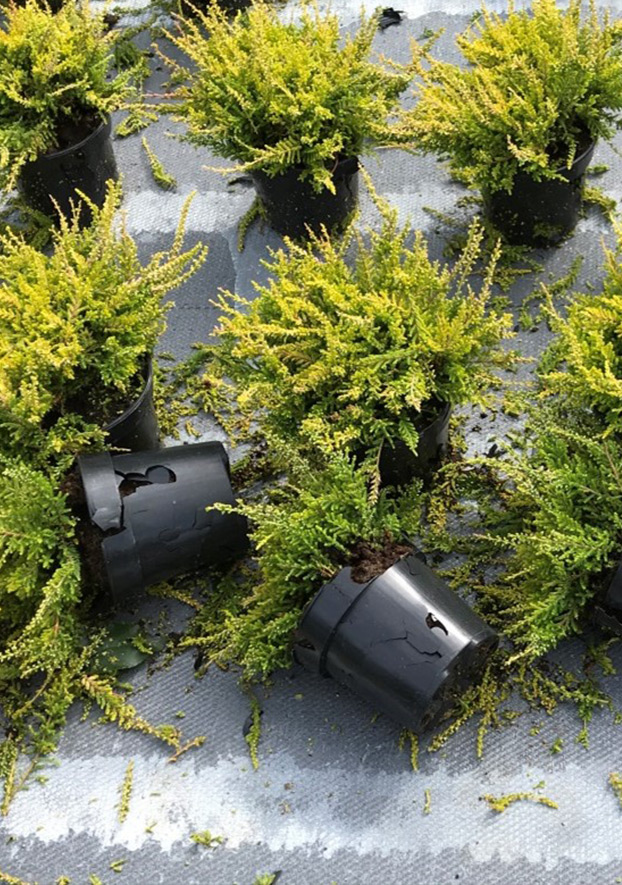
Hail often occurs as a side effect of so-called supercell thunderstorms. Only these extreme weather phenomena, which consist of several individual thunderstorms, heavy rainfall and numerous updrafts and downdrafts, can produce hail. Raindrops from the updraft freeze at high altitudes, then fall back down and grow as more frozen water droplets accumulate. Hailstones usually have a diameter of 0.5 to 3 cm and can weigh up to 20 grams. However, much larger hailstones can also occur, although they rarely fall as precipitation in our latitudes. Hail can occur at any time of the year, although an increased frequency can be observed in the months from May to August. Although hail can occur anywhere, certain regions are affected much more frequently than others.
- You can use hail zone maps, such as those from the German Federal Office of Civil Protection and Disaster Assistance (“Bundesamt für Bevölkerungsschutz und Katastrophenhilfe” – BKK), to find out about the local hazard risk.
Hail events in the past
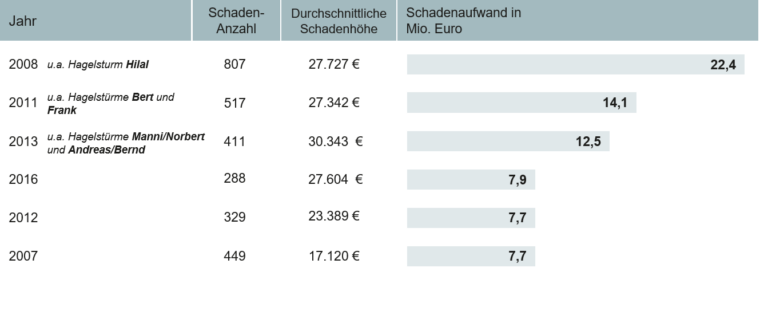
Over the last 20 years, hail events in Germany have had devastating effects on horticulture businesses. The most serious events were in 2008, 2011 and 2013. Even though there has been comparatively less hail damage to Gartenbau-Versicherung member businesses in recent years, studies show that the frequency and intensity of hail events could increase due to climate change.

Risk potential from hail
- Damage to greenhouse roofing
- Damage to plants
- Damage to vehicles and technical equipment
Indirect damage
- Damage to plants caused by falling glass
- Increased risk of disease in damaged plants
- Blocked rain gutters/drainage shafts that can cause flooding
The extent of the damage caused by hail depends on:
- Type of hail
- Hailstone size
- Wind speed
- Angle of incidence
- Density of incidence
Preparatory measures
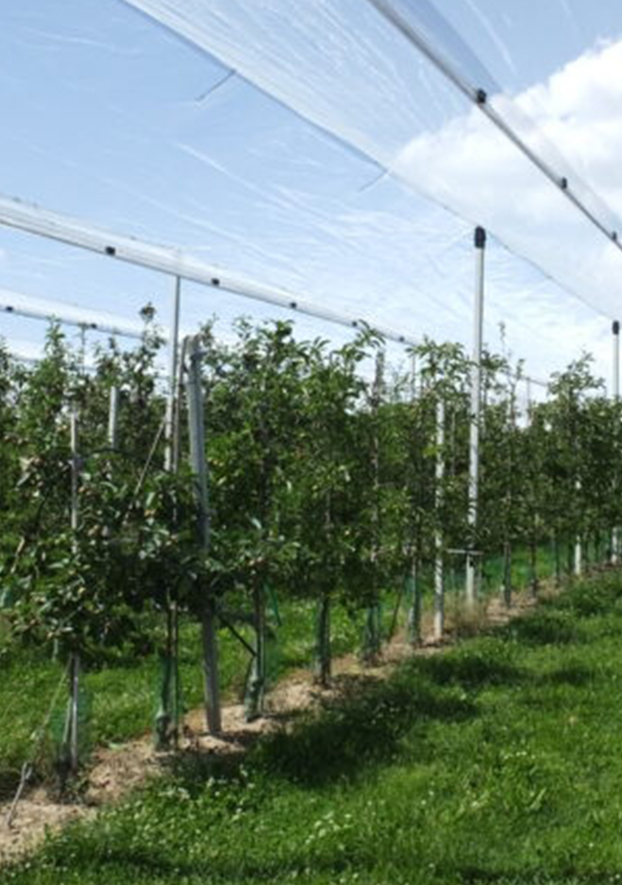
It is difficult to prepare for hail events at short notice, as they occur without warning. It is therefore particularly important to prevent damage in the long term. When planning a greenhouse system, for example, the use of safety glass is recommended. This has an increased resistance to breakage compared to conventional greenhouse glass. In the event of damage, it disintegrates into small crumbs of glass and therefore causes less damage to crops and greenhouse equipment. In greenhouse systems, care should also be taken to ensure that drainage channels are kept clean, as hailstones can otherwise easily lead to blockages and water accumulation. You should therefore regularly clear gutters of leaves and other debris so that water can drain away better. When purchasing solar and photovoltaic systems, also look out for hail-proof products. For outdoor crops such as nursery plants, hail protection nets can be used.
What to do before and during a hailstorm
Step 1

Check the weather warnings issued by the German Weather Service
Step 2
Space permitting, move hail-sensitive materials and vehicles into your production hall before severe weather events occur
Step 3
If there are no crops in a greenhouse, we recommend setting the thermal screen to package mode
Step 4
Leave greenhouses immediately and do not remain in the open. Seek shelter indoors
Your contact person is looking forward to hearing from you.
You would like to report loss or damages?
Contact your risk advisor or submit a claim using our online form. Once we have received the notification of your claim, we will process it and contact you as quickly as possible.
In the event of a claim, we are here to help.
In the event of a claim, you need your insurance company to process your claim swiftly and unbureaucratically and provide immediate assistance.
Three things our members can count on:
Initial damage assessment within 48 hours.
Knowledge shared is knowledge doubled.
Focus topics: Useful information and helpful tips on horticulture.